

The Product & The People
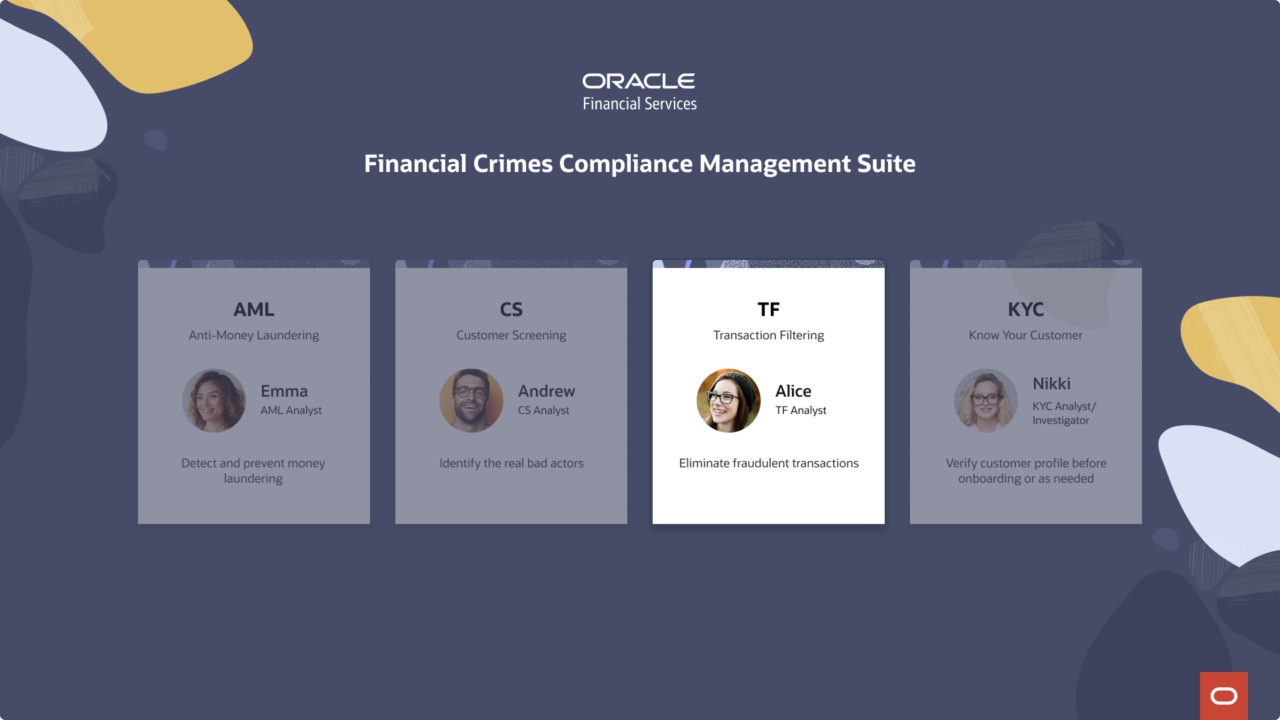
Transaction Filtering is 1 of 4 products inside Oracle’s Financial Crimes Compliance Management suite. While AML watches for suspicious patterns, Customer Screening flags bad actors, and KYC verifies who customers really are, Transaction Filtering does something more immediate: it catches fraudulent transactions before they clear.
Every transaction a bank processes is screened against global watchlists in real time. When a match is flagged, it lands in an analyst’s queue, and the clock starts. Analysts have SLA windows to compare the transaction against watchlist records and make a judgment call: block it, release it, or escalate it.
I led the end-to-end redesign from discovery through usability testing, working closely with Mehul, a new Principal UX Designer I had helped hire. I set the project structure, ran the timeline, and led design decisions; he embedded with the Financial Industries team and became a genuine thought partner.
The product existed. But it had accumulated screens without ever asking how an analyst gets through 100 alerts before the end of the day.
Understanding the Users
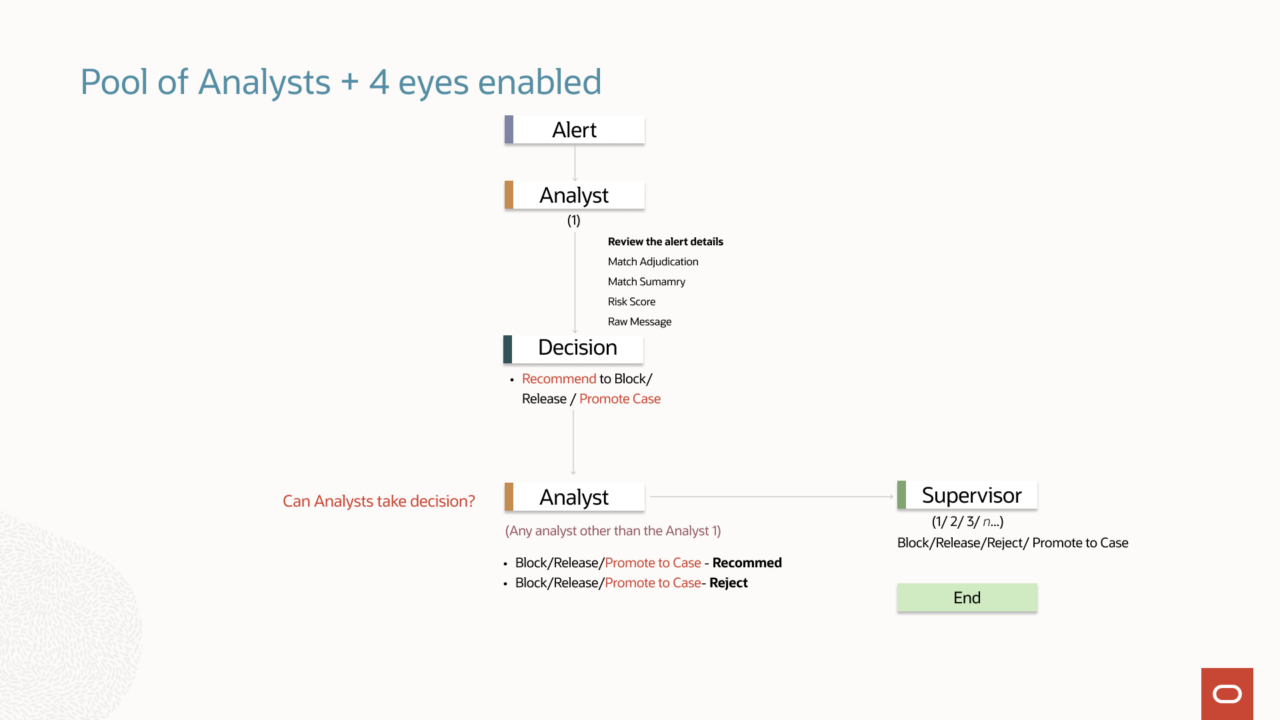
Transaction Filtering is built around a 4-eye principle: every flagged transaction requires 2 independent reviews before a final decision is made.
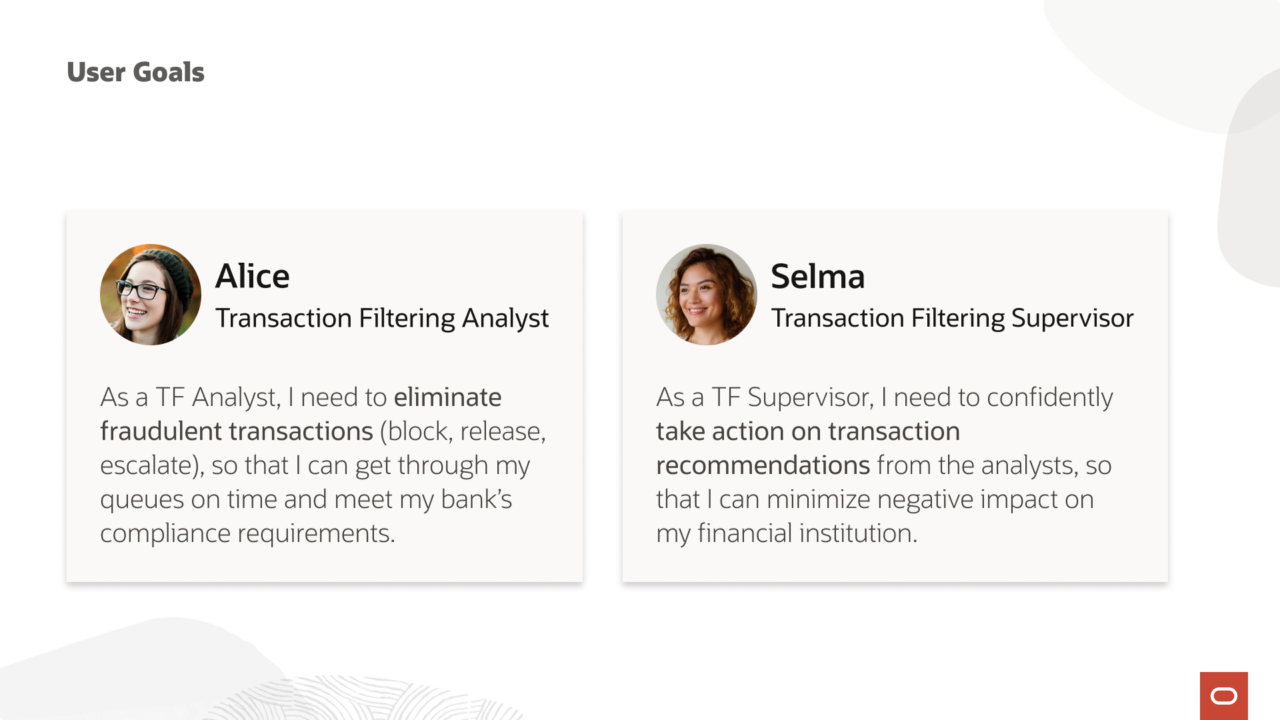
Alice · Analyst
Investigate and recommend
Works through her queue, evaluates every event, and recommends whether to block or release.
Selma · Supervisor
Review and decide
Reviews Alice’s evidence and makes the final decision that determines whether the transaction clears.
The Problem
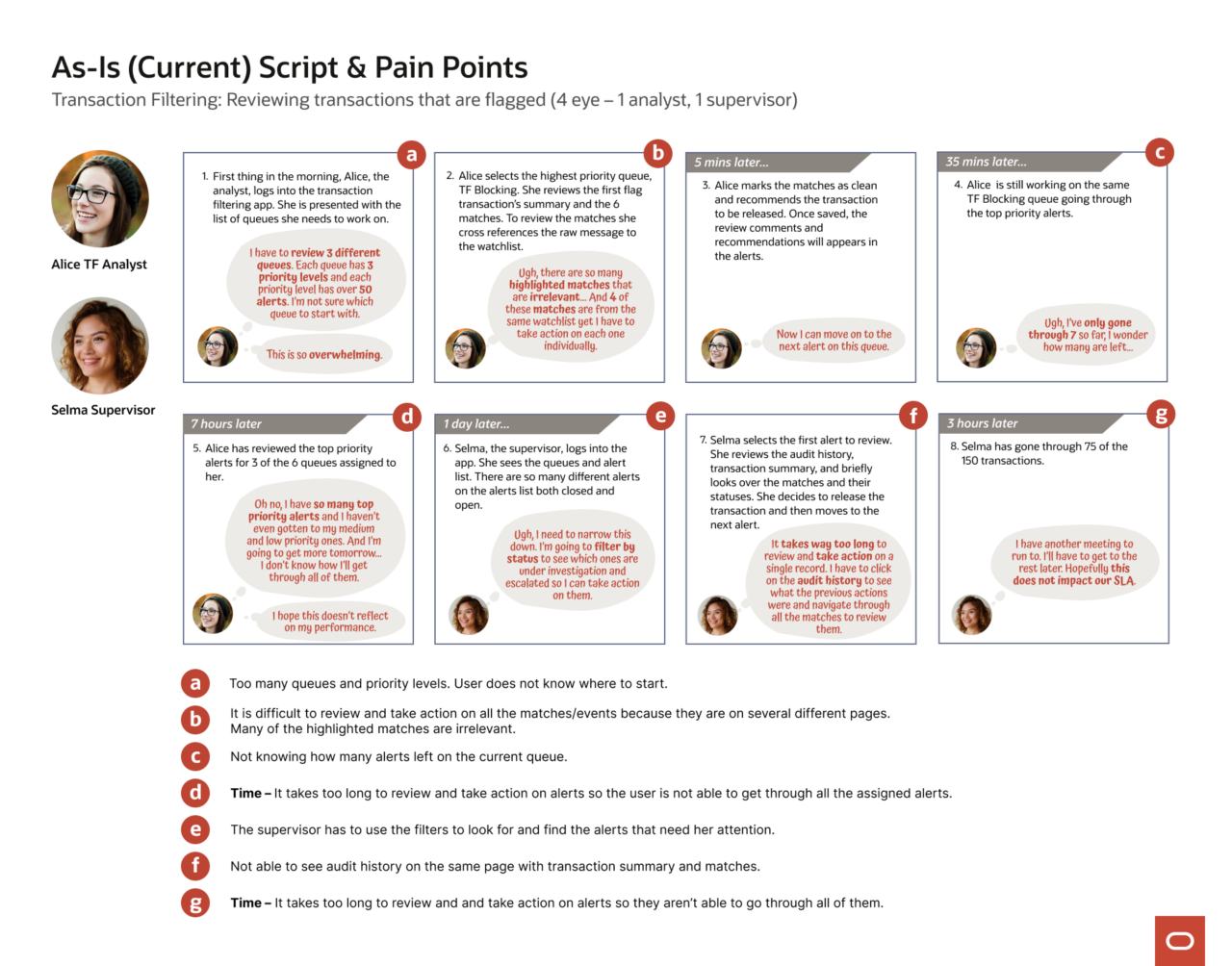
For Alice
5 to 9 events per alert, scattered context, and a ticking SLA across roughly 100 alerts a day.
For Selma
Queues, recommendations, and audit history lived on separate pages, turning review into reconstruction.
The legacy product put everything on 1 long, unstructured page. Alice cross-referenced transaction data against watchlist details across multiple screens, judged every event individually, then scrolled back to submit a case-level decision.
Selma filtered her own queue, navigated away from the list to review records, and pieced together audit history from separate pages. By the time she had enough context to decide, she had already spent more time than the workflow should require.
Discovery
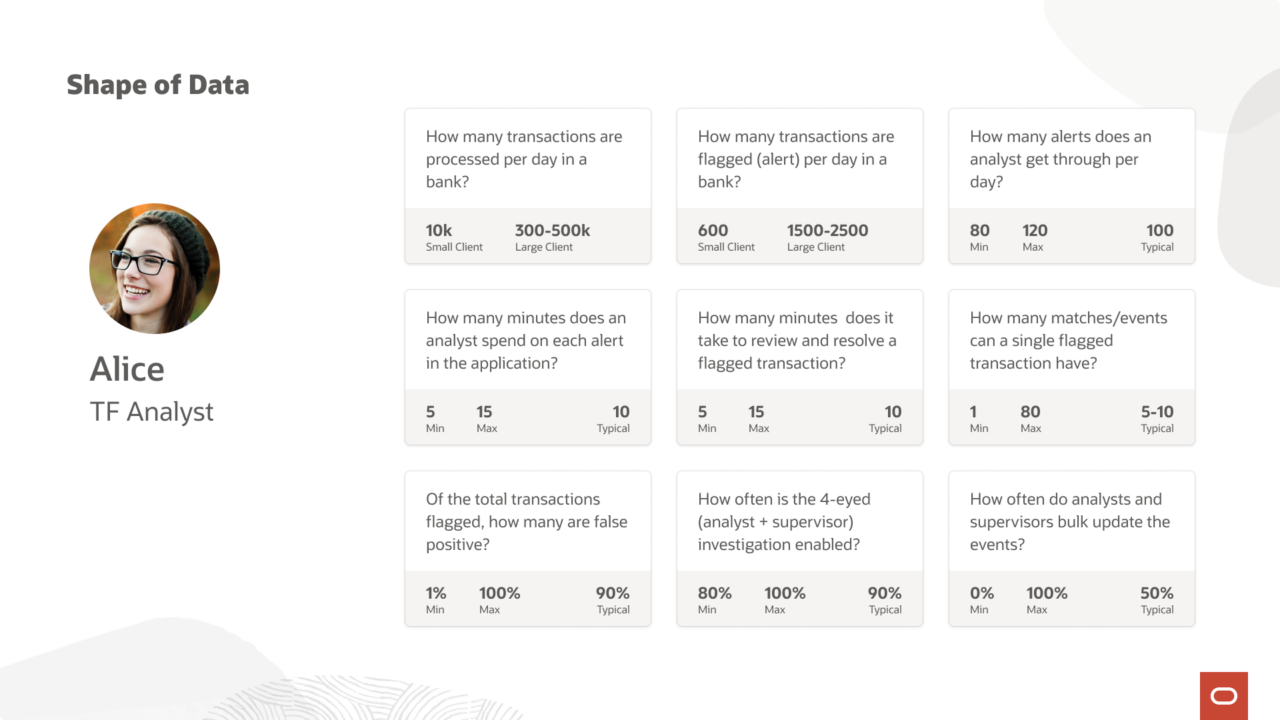
I came in mid-project, which meant running my own discovery with stakeholders, financial-services consultants, and domain experts. Shape of Data questions came only after understanding the users’ goals, workflow, and pain points.
The answers varied by client size, but 1 ratio reframed the project: roughly 90% of flagged transactions are false positives. Analysts are not investigating threats all day. They are triaging noise at volume, under SLA pressure.
Design Exploration
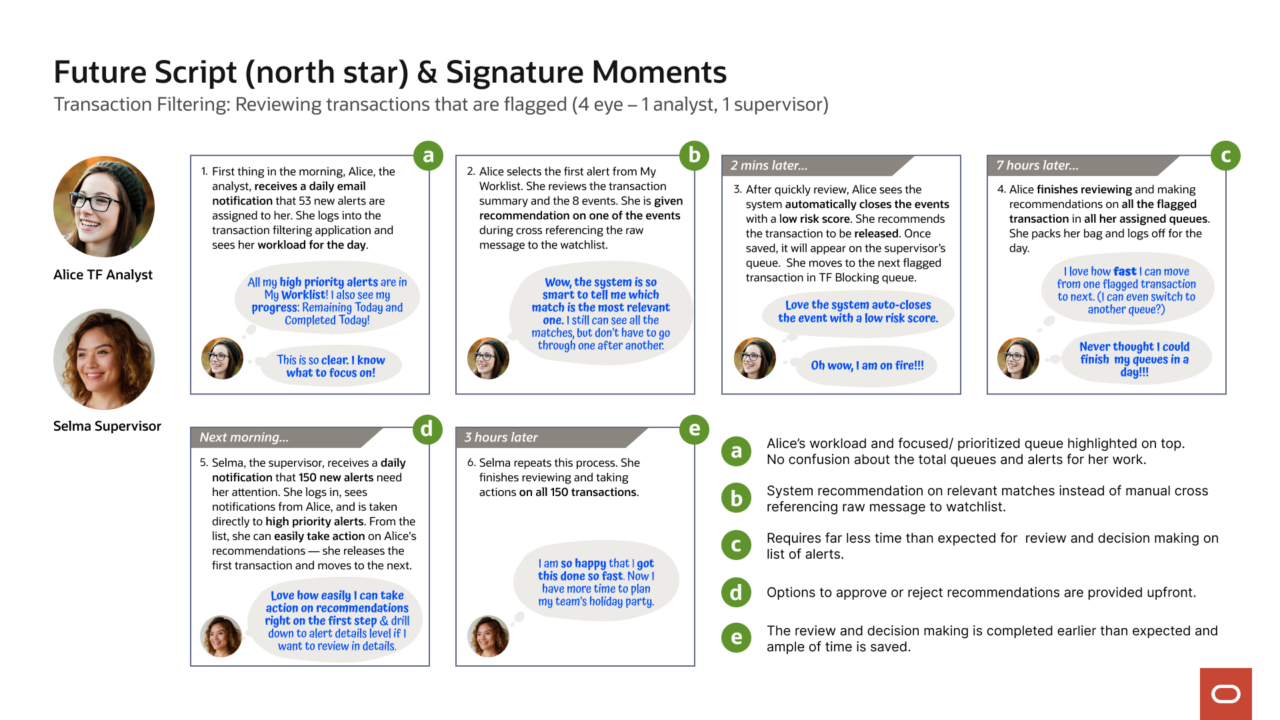
The Future Script gave us the north star: Alice sees prioritized work immediately, moves through alerts with confidence, and finishes her queue in 1 day. Selma sees recommendations in the list, takes action without unnecessary drill-in, and closes 150 alerts in 3 hours.
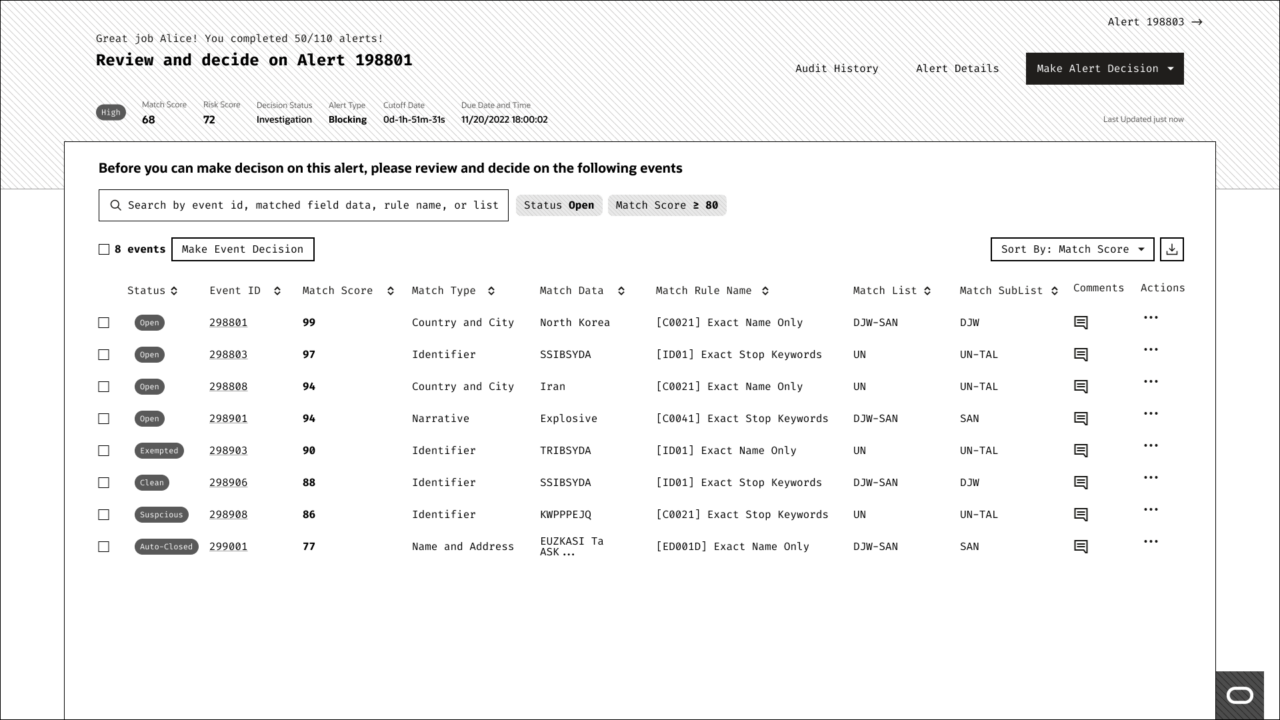
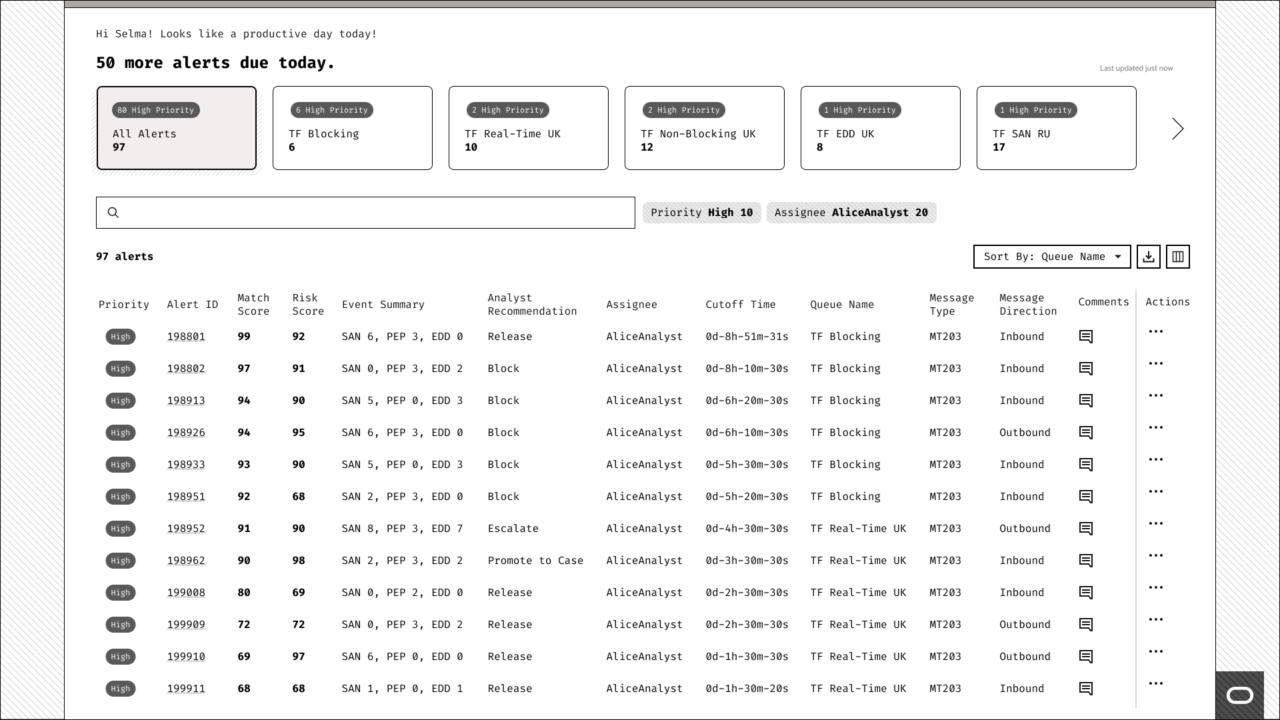
Finding the right structure took 2 failed attempts. A data-management table with a drawer hid the context Alice needed while deciding. A dashboard layout gave Selma a skin, but did not solve the shared workflow underneath.
Attempt 01
Data management + drawer
The action surface covered the case context Alice needed to make the action.
Attempt 02
Supervisor dashboard
A dashboard treated Selma as a different workflow when hers was really the same flow, already filtered.
The Key Decision
Keep the evidence in view
Events on the left. Watchlist comparison on the right. Decision in context.
A drawer could not do it. A dashboard did not solve it. Redwood’s emerging Collection Details pattern could keep case-level context and event-level detail visible at the same time.
We tested TF’s real use case against the template, aligned with its designer, then defended the decision through leadership and stakeholder reviews. The evidence held.
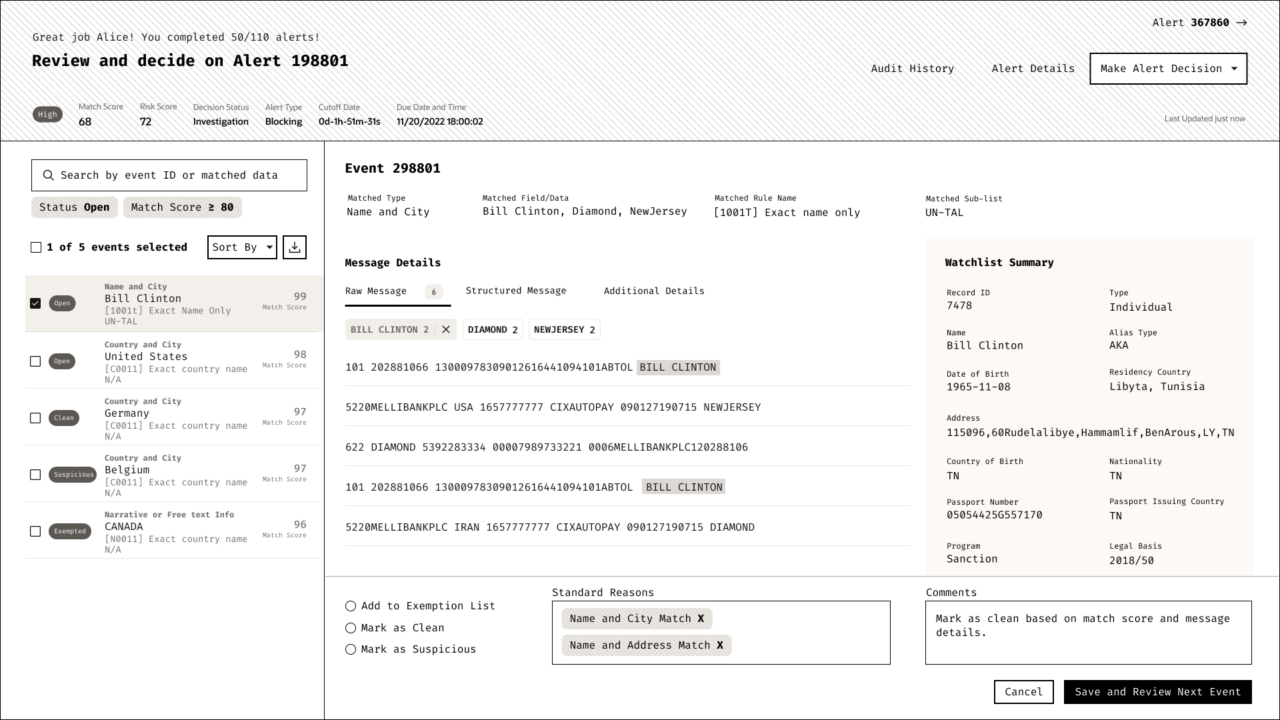
1 Continuous Decision Flow
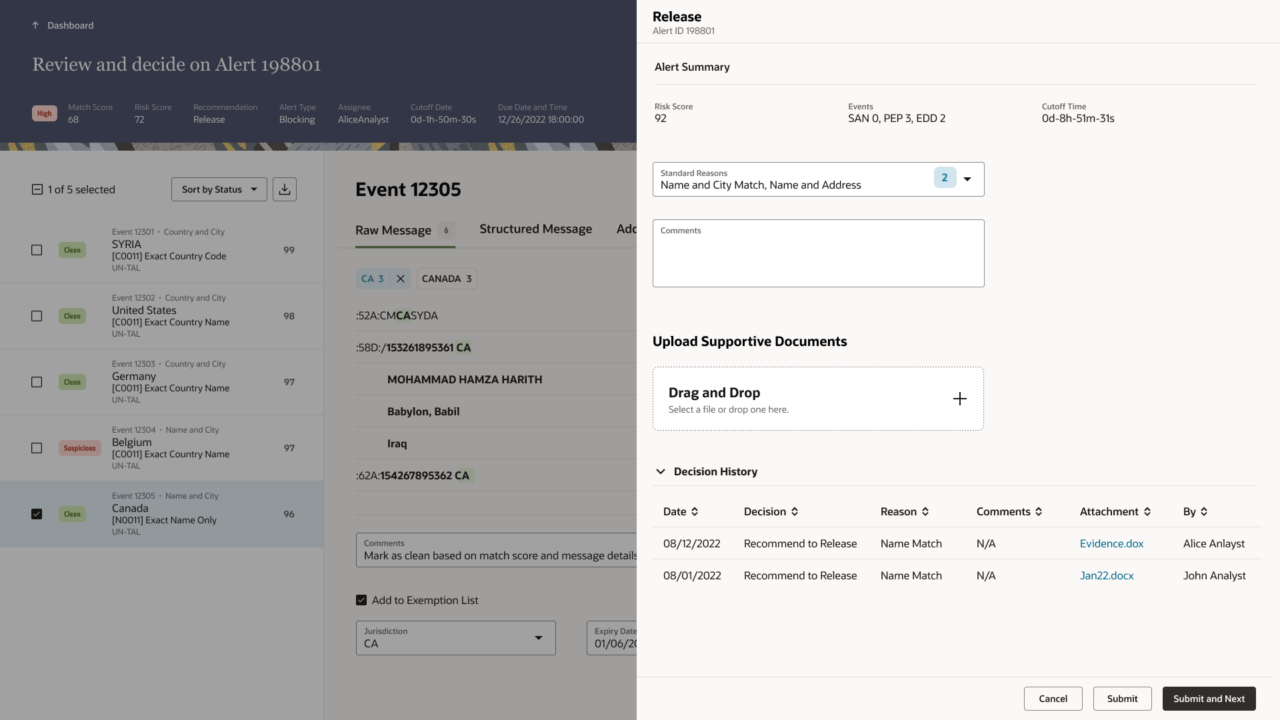
The redesign gave Alice a single structured workspace. She compares 1 event at a time, selects repeated patterns in bulk, sees every resolved status in place, and expands exemption fields inline. When all events are complete, the system confirms it and unlocks the alert decision.
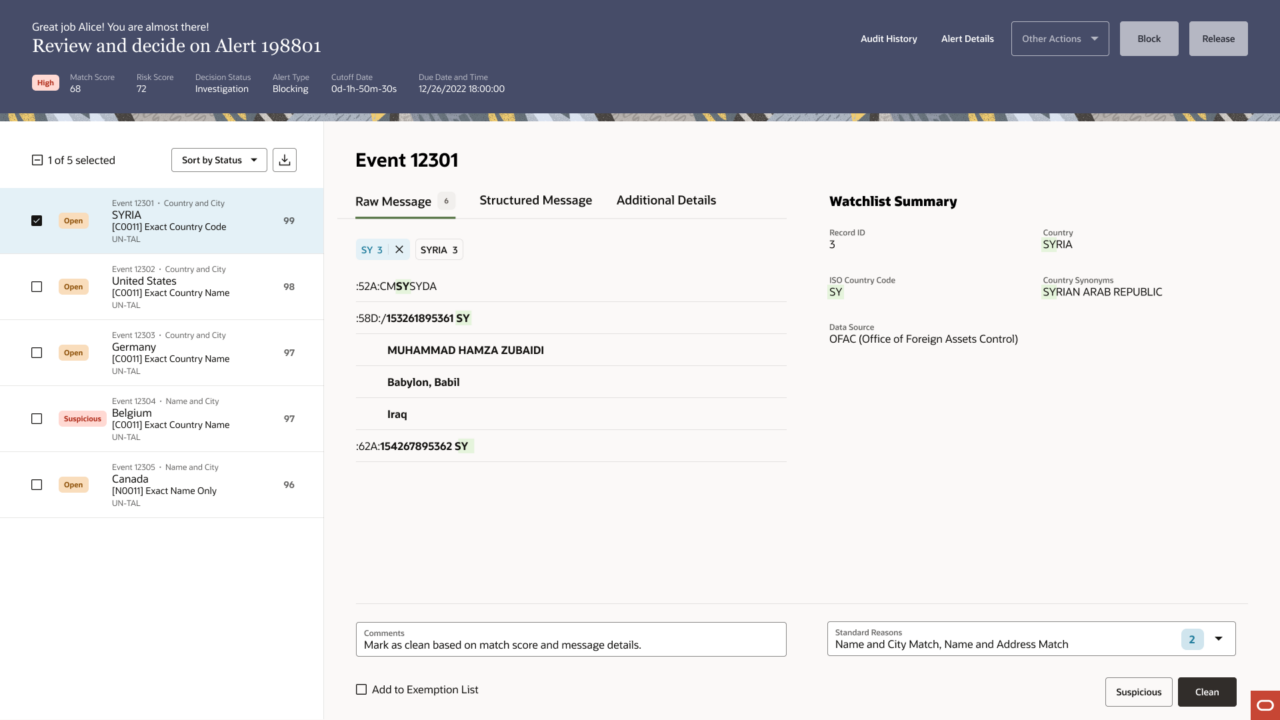
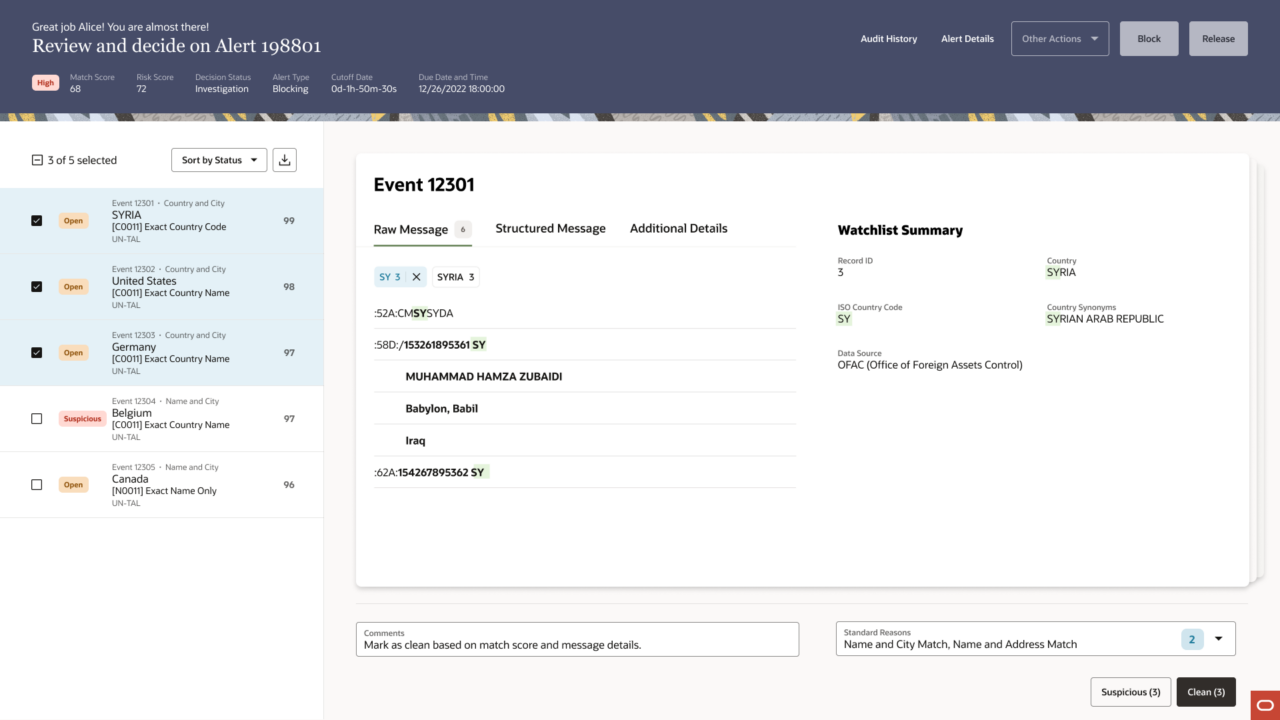
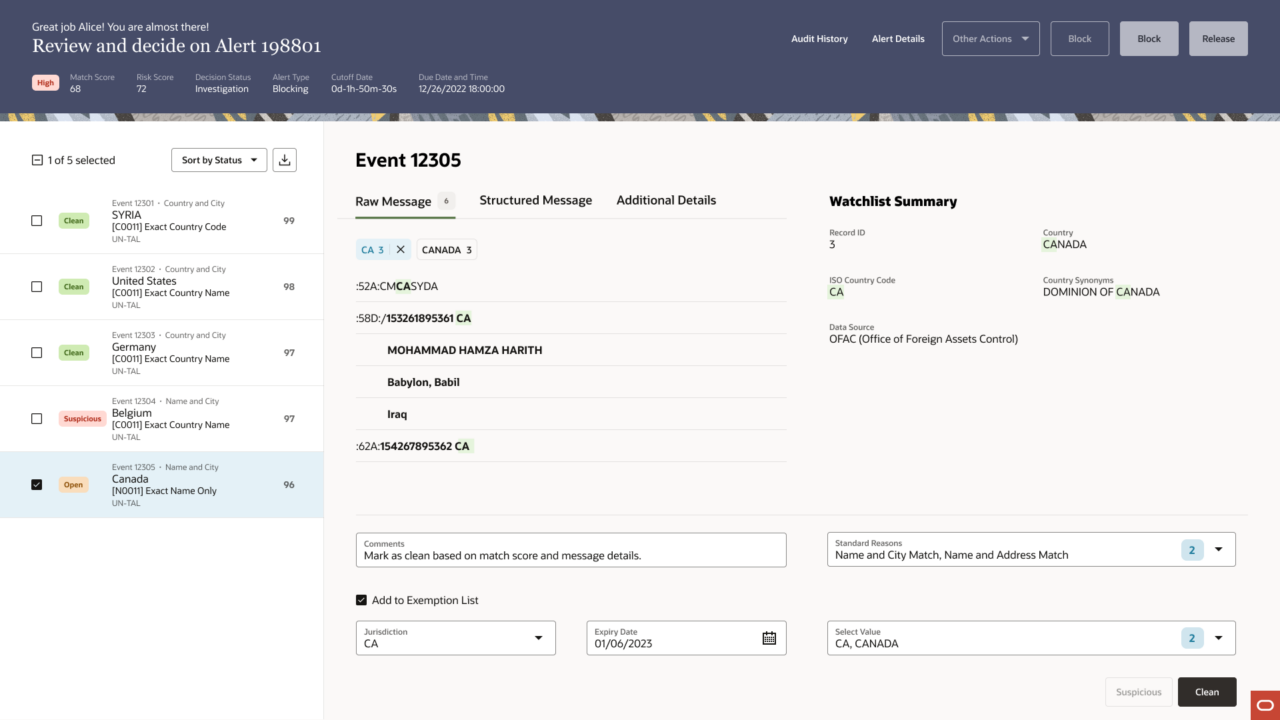
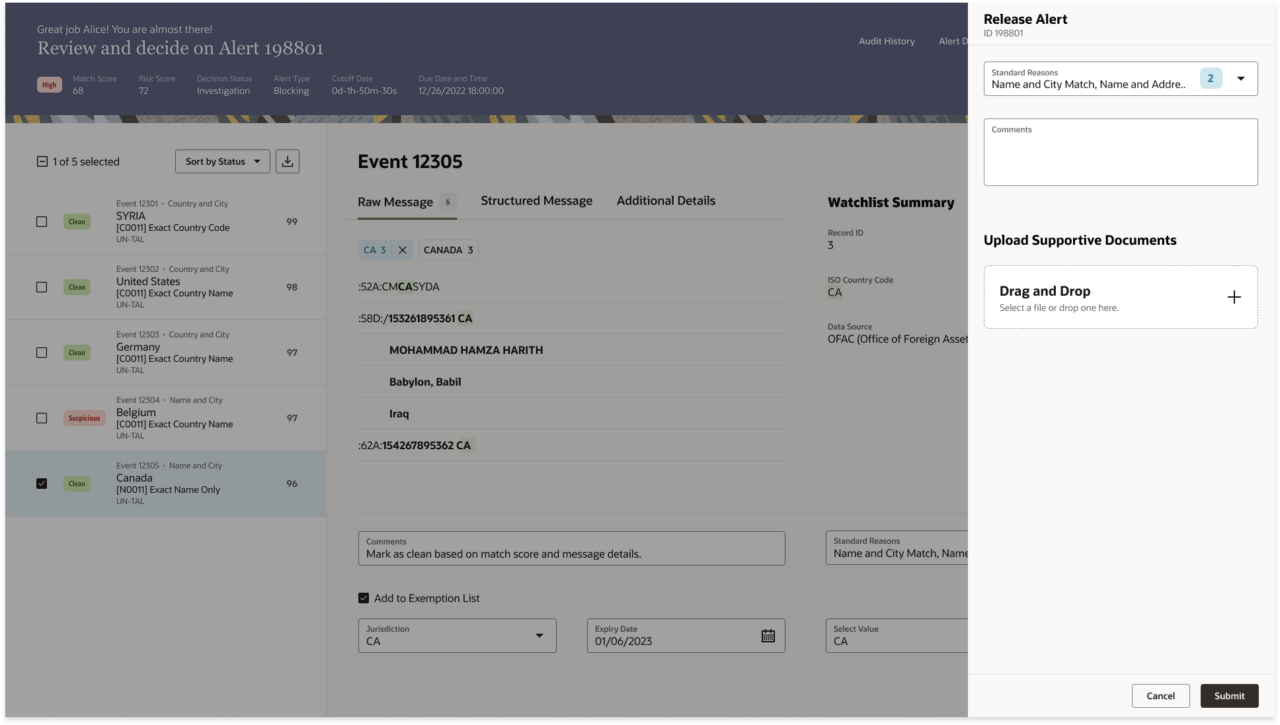
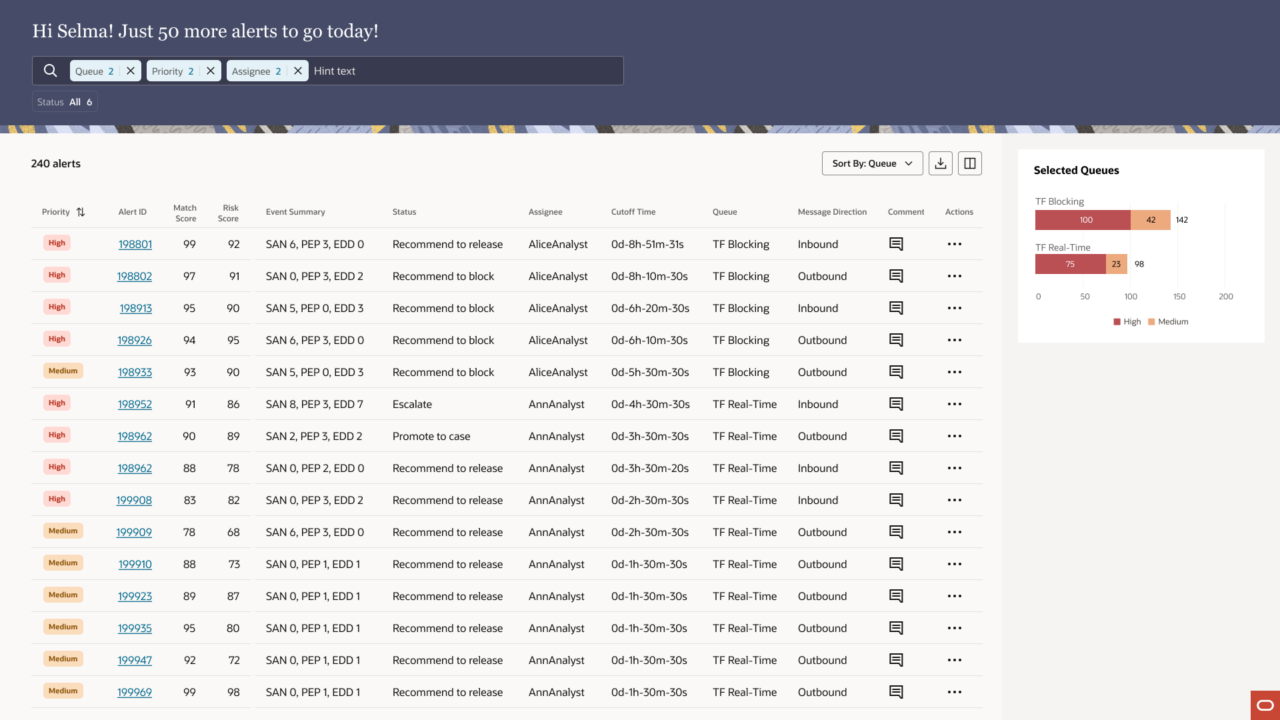
Selma’s side is built around managing her team’s work. She filters to her direct reports, sees recommendations before opening an alert, then reviews the exact same case Alice worked with Alice’s recommendation already surfaced.
Reflection
Honesty over attachment
I had designed an earlier ALTA version of this product. Rebuilding my own shipped work taught me that good design is not precious; it asks better questions when the context changes.
Inhabit the workflow
People on the team said I had become Alice. That is the highest compliment: understanding the queue deeply enough that the right interaction model becomes undeniable.
Conviction is collaborative
2 explorations failed before the right structure emerged. Mehul and I built the evidence, defended the decision together, and gave Collection Details its first real-world proof.